
Air Source Heat Pump
What is an air source heat pump?
In a nutshell, an air source heat pump takes in air from outside and compresses it to heat it up, using a gas that is cycled within the system. This heat is then fed into your home, most commonly by heating the water in your central heating system and providing your hot water. This is a direct replacement for a gas boiler.
The system will use electricity to do this, with an energy efficiency of over 350%. Even an A-rated gas boiler only reaches about 90% efficient, if was fitted within the last 20 years. Otherwise it will be much less efficient than that. In other words, an air source heat pump will produce more heat energy in kWh than they use in electricity.
The specifics of the system that’s appropriate to your home will depend on many factors, such as the size of your home, how your hot water is produced, and other energy efficiency measures that may or may not be in place.
It speaks to the effectiveness, efficiency and economy of air source heat pumps that they are wildly popular in Sweden, Finland and Norway, and cheerfully keep working covered in snow!
Having an air source heat pump fitted
We had already had cavity wall insulation fitted six months previously. This was a requirement for having an air source heat pump fitted as we needed to improve the energy efficiency of our home to maximise the effectiveness of the air source heat pump.
Once again the house needed to be inspected, first so that we could have our certificate issued after the cavity wall insulation was fitted, and then to calculate the heat loss and requirements of our home to ensure we had the most appropriate unit. We had to pay £200 for Octopus to carry out this inspection as it was a long job, but it was taken off the bill at the end.
The inspection found that most of our radiators were inadequate. They had been in place for decades and were silted up and not providing heat effectively. This didn’t come as much of a surprise! Octopus recommended that we had 10 radiators replaced. We were more than happy to do this as part of a general upgrade of the house, and to make the most of the air source heat pump. Octopus dealt with supplying the new radiators for us so it was no effort for us.
Storing the kit
We were given a date for our installation and the wheels began to turn. We were given a list of things to do ahead of time, such as clearing away anything that would be in the way indoors and outdoors at the installation location. This meant clearing away a few planters that were against the wall, and moving the tumble drier out of the corner that the new boiler would sit in.
We needed to remove a wall-mounted cupboard too as it was directly in the way.
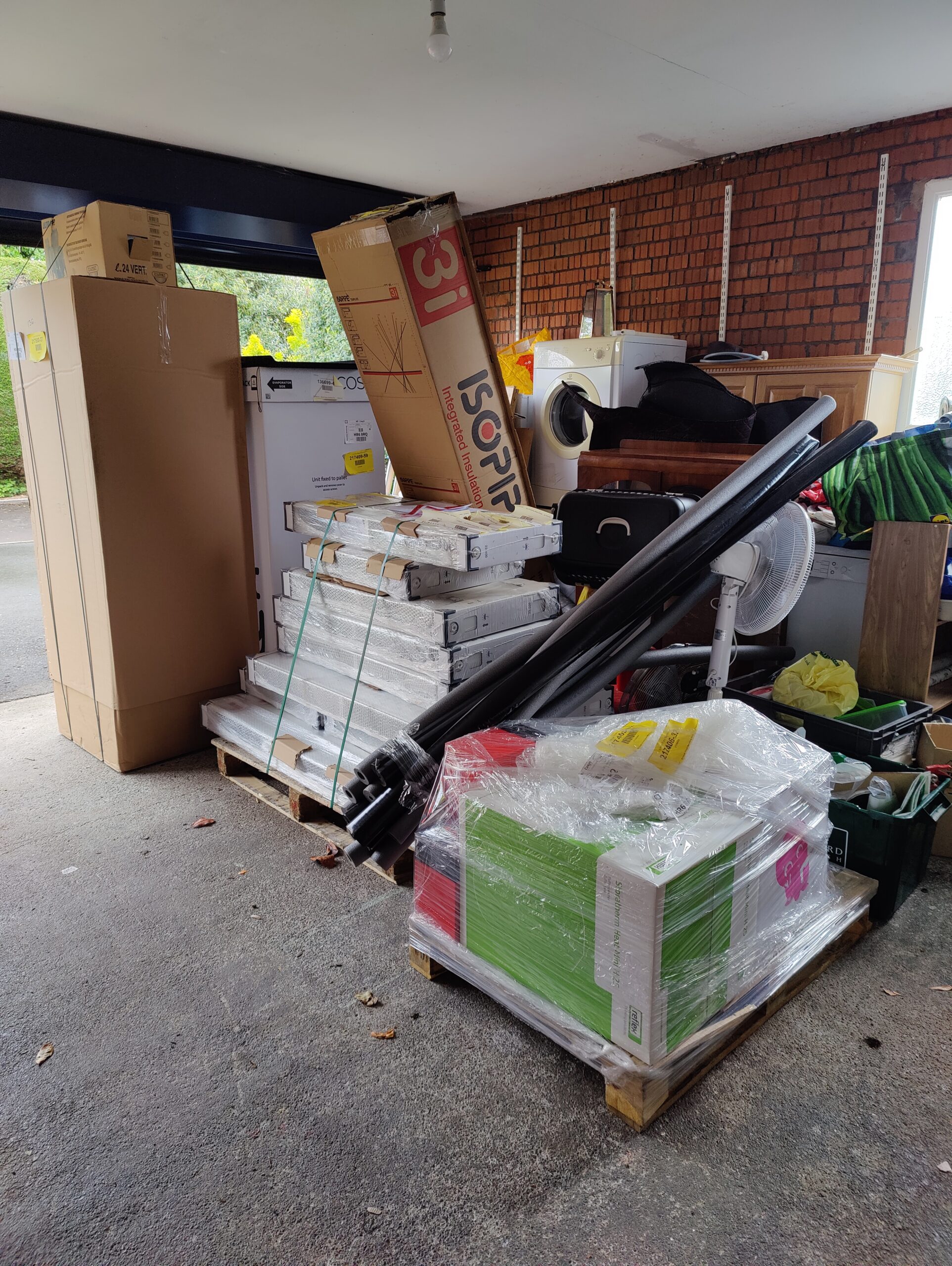
We also had to clear a space in our garage “about the size of a small car” to take all the kit that was delivered ahead of time.
Octopus wasn’t kidding. They delivered the boiler, the pump itself, 10 new radiators and miles of pipes and insulation. They also delivered several fan heaters in case we needed heating while the system was out of action. We have a double garage and don’t keep a car in it so we accommodated all the kit no problem.
Fitting the air source heat pump and boiler
The first day was largely taken up with removing our existing old Worcester boiler from our utility room. We knew the old boiler wasn’t up to the job and had been looking at the best options for a replacement. Once we looked seriously at an air source heat pump we knew we’d found the best option for our home.
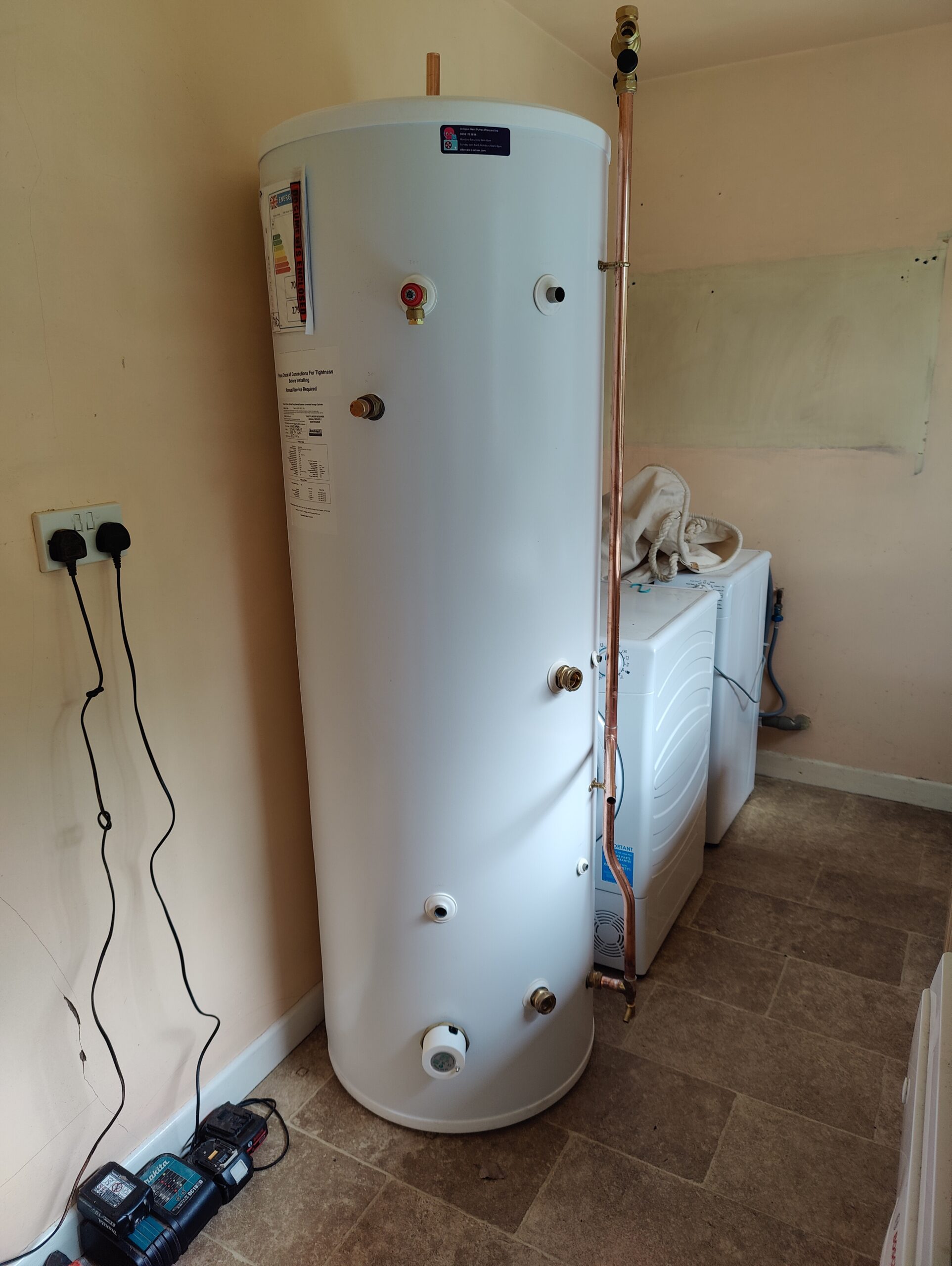
Enough space had to be created for the behemoth that is our new boiler, and in the end this required cutting a couple of cms of wood off the end of the sink unit. This allowed the boiler to fit in perfectly, and used an empty space that had sat next to the tumble drier. We’re now using every inch of space in our long and narrow utility room to the max.
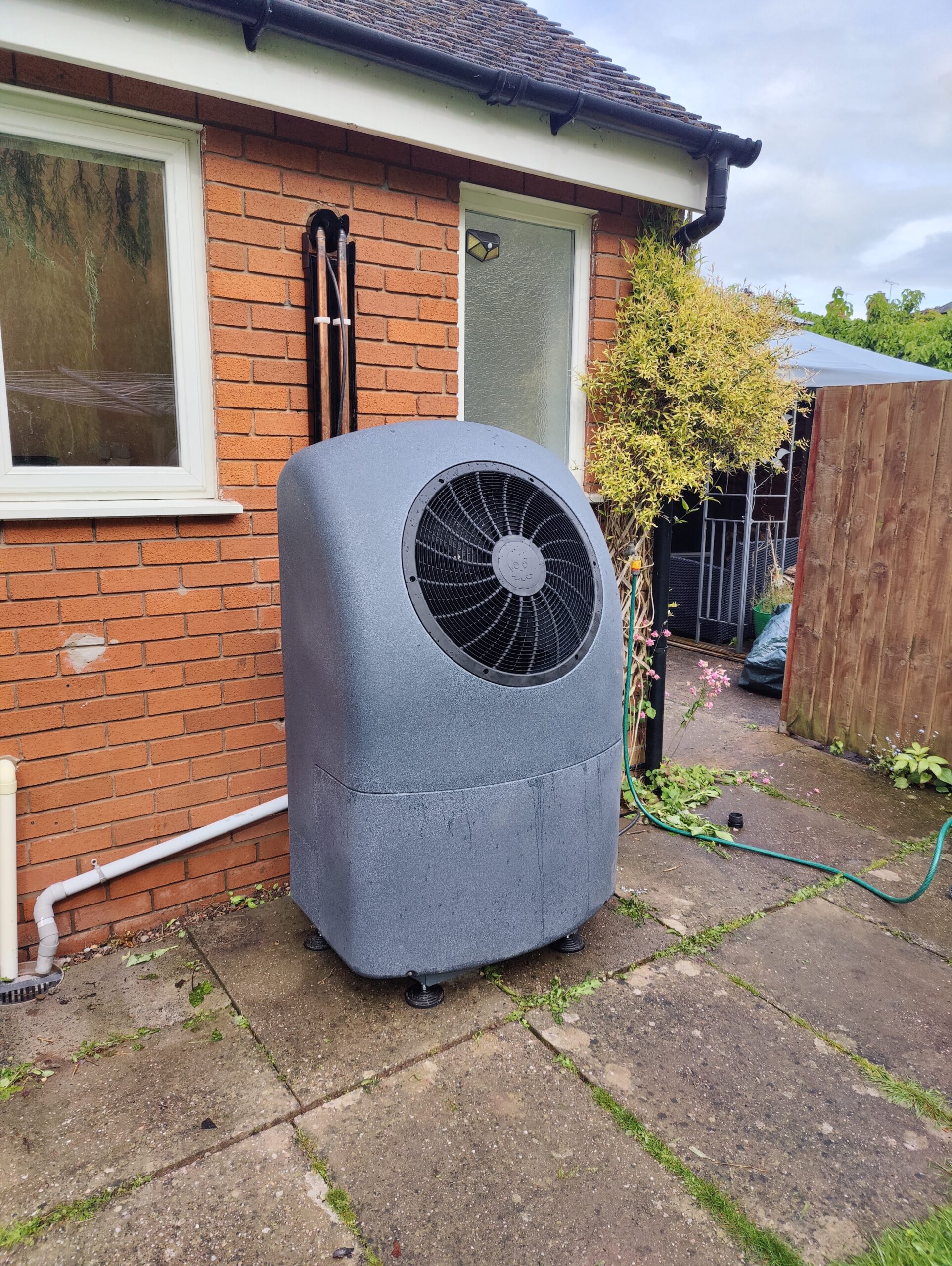
The pump itself was set up outside our utility room window, which at first we thought might be a bit intrusive, but we all forgot about it immediately. It’s not pretty but we don’t use that part of the garden for anything much so this is a good use of space. Our pump runs for three hours overnight to produce enough hot water for four people. It sits near a bedroom window but is lovely and quiet so doesn’t cause any disturbance.
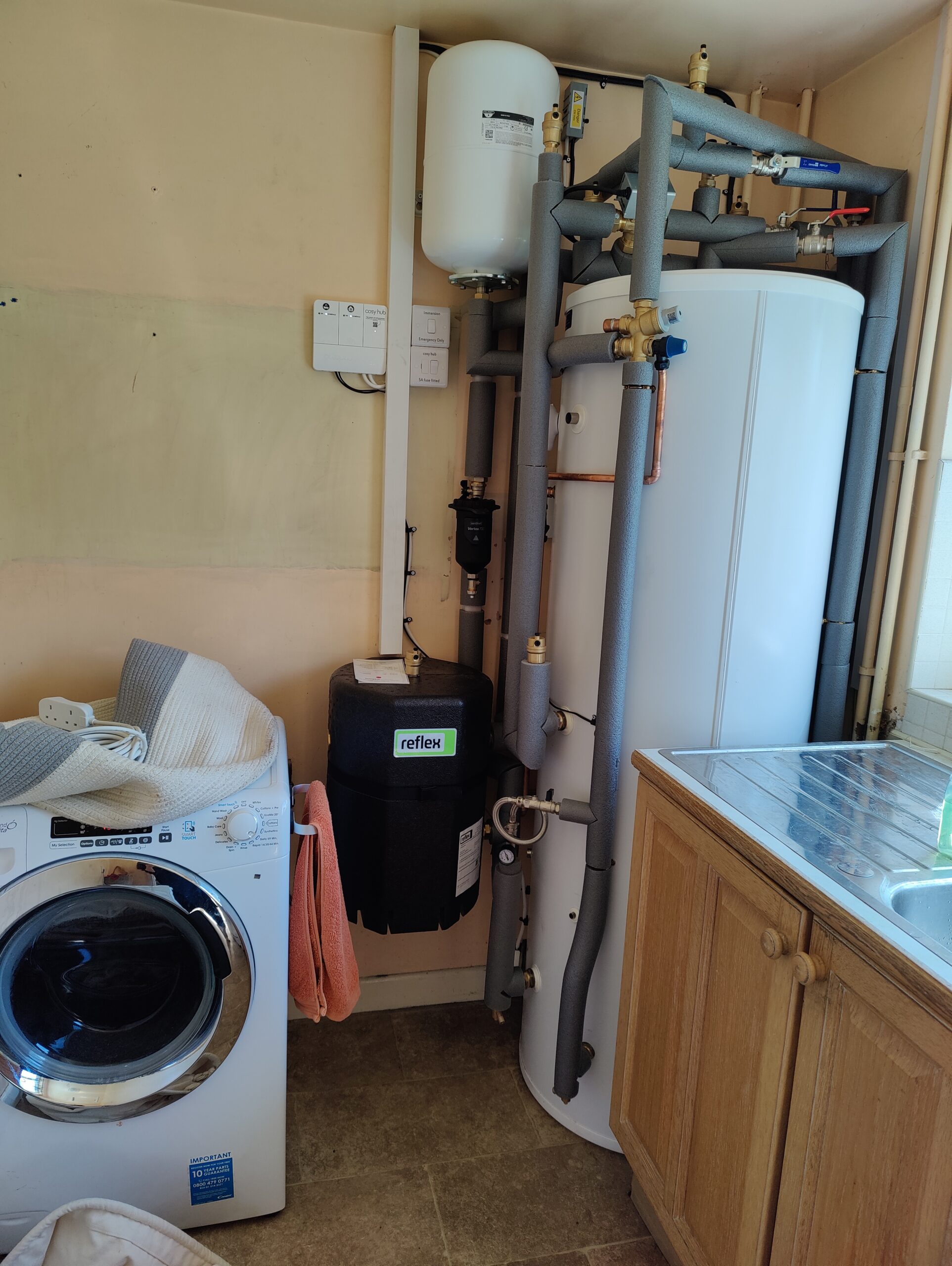
By day three the new boiler was in its final position and the rest of the required equipment mounted around it. Again the change was very stark and we wondered if we’d get used to this new set-up, but again we’re all completely used to it already. We might box it in at some point in the future, but we’ll need to make sure Octopus can still have access to it for servicing, so we need to design that carefully.
As well as the boiler, we have several switches on the wall. One is for the immersion heater, should we ever need it, and one is for the fuse. We also have two manual booster switches, one for water and one for the heating.
The system is controlled through the Octopus app on our phones. We can see the current temperature and humidity of the house, and the water temperature. We can boost through the app if we need to.
Our house is set with a target temperature of 18 degrees. We can easily tweak this if we need to, but with the cavity wall insulation too the house should remain at a comfortable and unobtrusive temperature. This will be a lovely contrast to the swings between hot and cold that we’ve had in previous winters.
Radiators
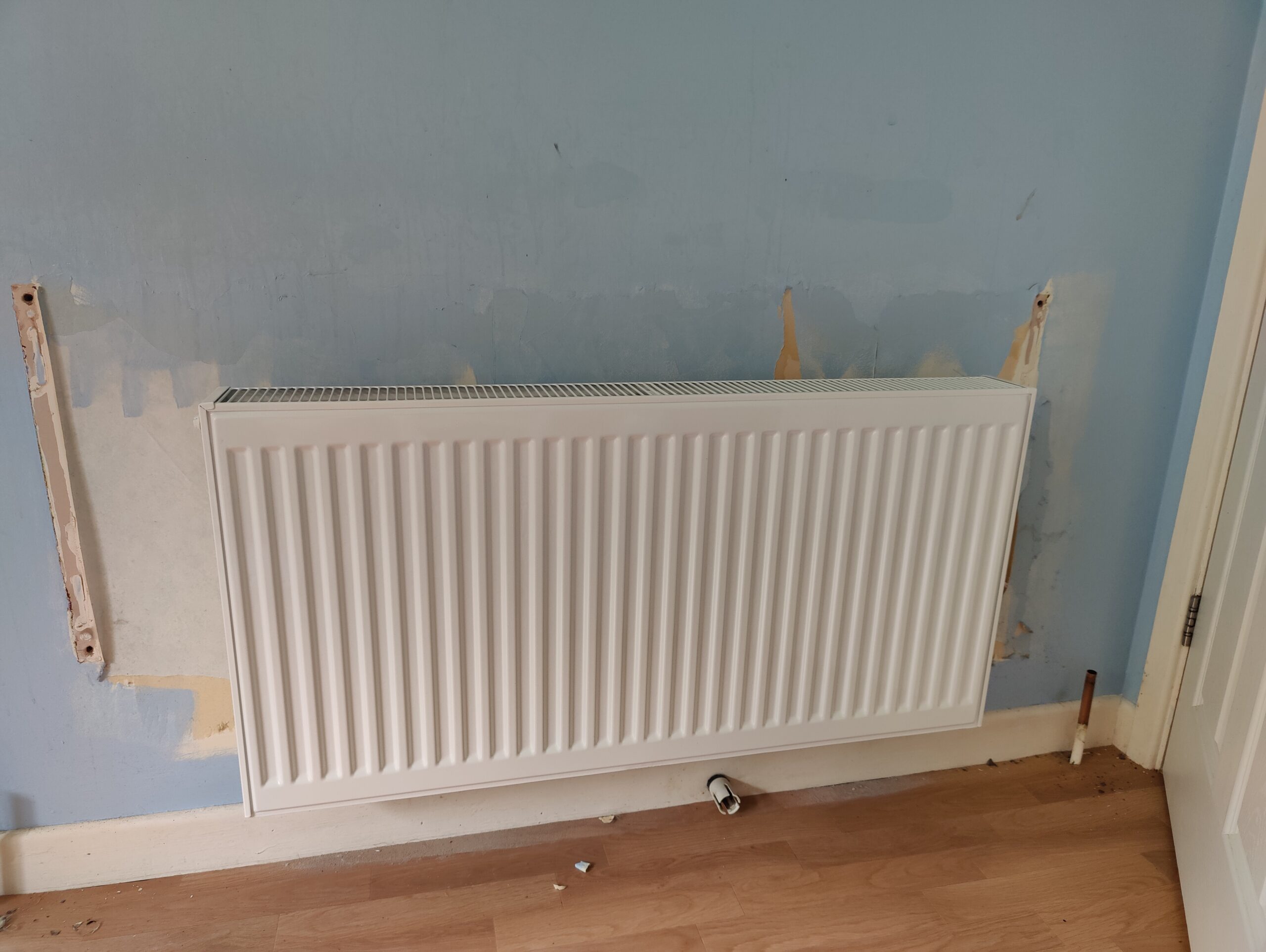
The new radiators are smaller and more efficient than the old ones, so we’re left with some DIY to do now. Some rooms need the edges of the lining paper stuck down again, which is the next job on our list, and some just need painting.
The guys from Octopus filled and sanded all the screw holes from the old radiator fixing. In some cases they needed to fit all new piping, and in others they were able to connect newer piping to old. As part of generally improving the house, this has prompted us paint a couple of rooms that really needed refreshing.
The new radiators are deeper than the old ones and altogether a big improvement.
The final set-up
After four days of work, the guys from Octopus cleared up all the mess. They’d put adhesive clear plastic down on our carpets to protect them, and all that came up too. All the waste, including our old boiler and radiators, was stacked up outside and collected on day five. Now it was down to us to get sorted out.
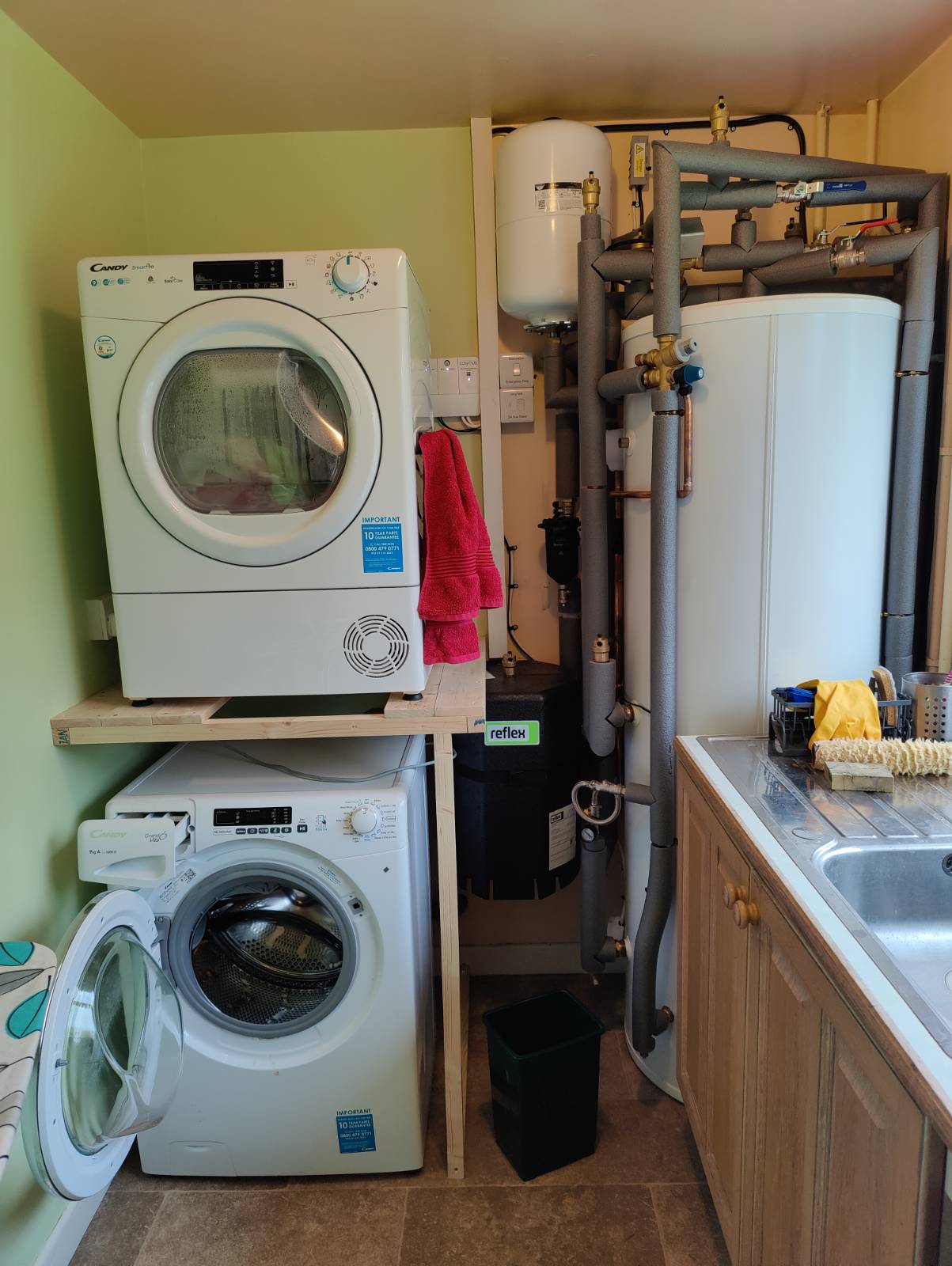
First we painted the utility room a fresh and vibrant green. There’s some final work to do on that. Then we built a stand for the (heat pump) tumble drier so it could sit on top of the washing machine. It used to sit next to it but that space has gone. The utility room is now back to normal function and we don’t think twice about the new equipment in there.
Ironically the work was finished just as we had a heatwave in the UK, so we haven’t needed to try out the heating, but it was tested at installation. The hot water system works perfectly. One unexpected benefit is much improved water pressure in the showers, as the water is pressurised rather than gravity fed as before.
We wholeheartedly recommend having an air source heat pump installed. With the Boiler Upgrade System it came it at just over £4000 and will pay for itself with reduced heating costs really very quickly. We can now have our gas capped off and have no more gas bills, which together with the environmental cost of gas is a big relief. We use renewable electricity to power our home and car, so bit by bit we are doing what we can to improve energy efficiency and keep our bills down.